
The Great Garden Whodunit
Summertime—a season for popsicles, sprinklers, sleeping in and of course, disappearing acts.
That is, the natural kind.
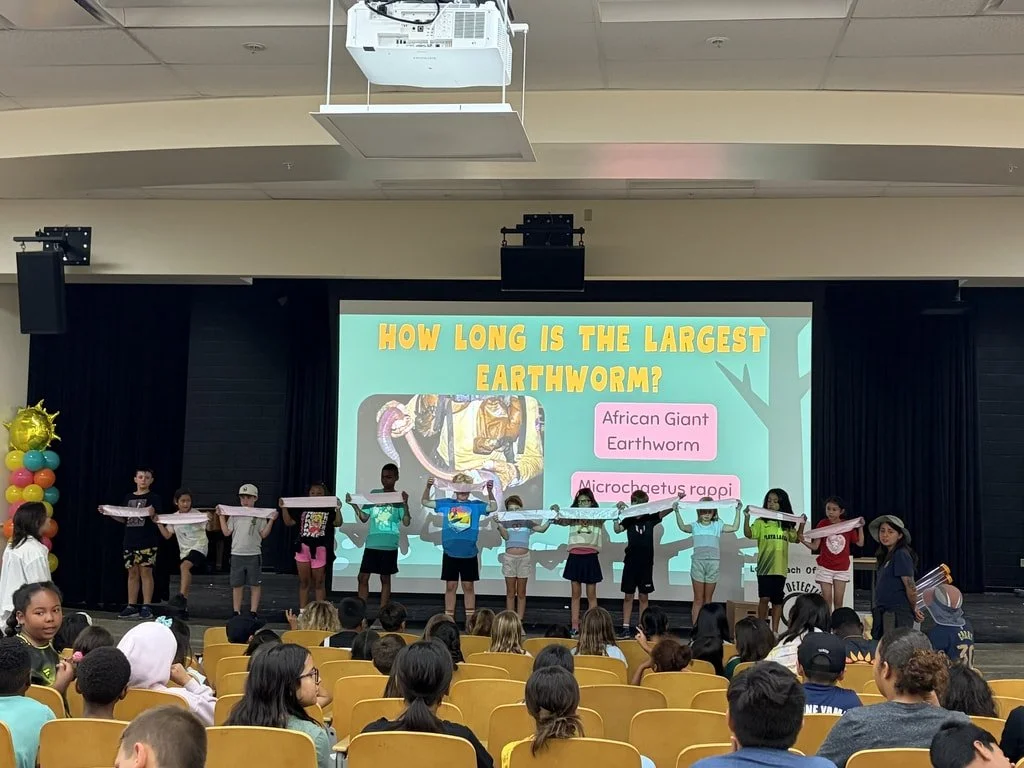
This summer, Ground Education visited 43 LBUSD elementary schools where students became Dirt Detectives, investigating the mystery of a missing watermelon while discovering the crucial role of decomposers in healthy ecosystems. Through a series of interactive assemblies, more than 3,000 students gathered clues from earthworms, fungi, roly polys, and other garden residents, using observation, teamwork, and scientific thinking to solve the mystery and learn how these tiny organisms recycle nutrients back into the soil.
So, what happened to the watermelon?
Once students had a chance to touch and discover the creepy crawlers in our soil, it didn’t take long for them to put all the clues together to determine…there’s more than one player in this mystery - it takes a team!
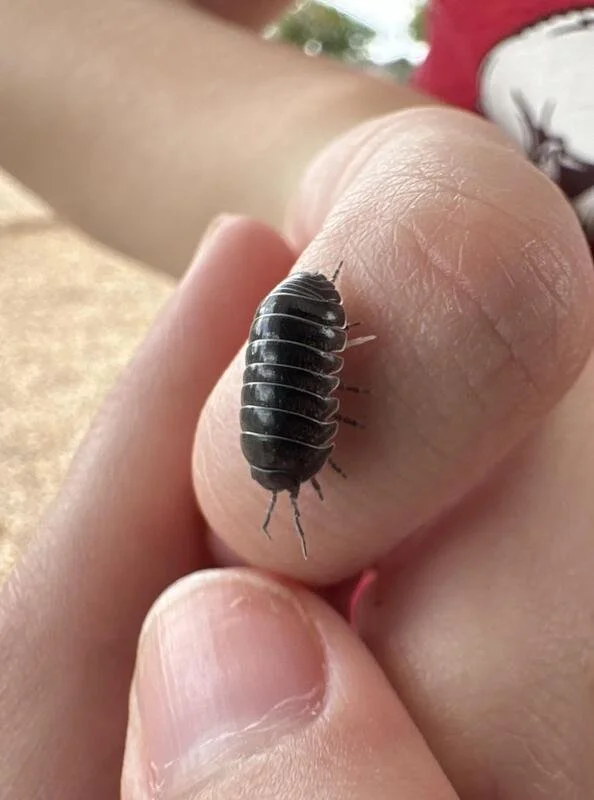
Roly-polys and earthworms are soil engineers, working together to break down dead plant material and build healthy soil. Here are their specialized roles:
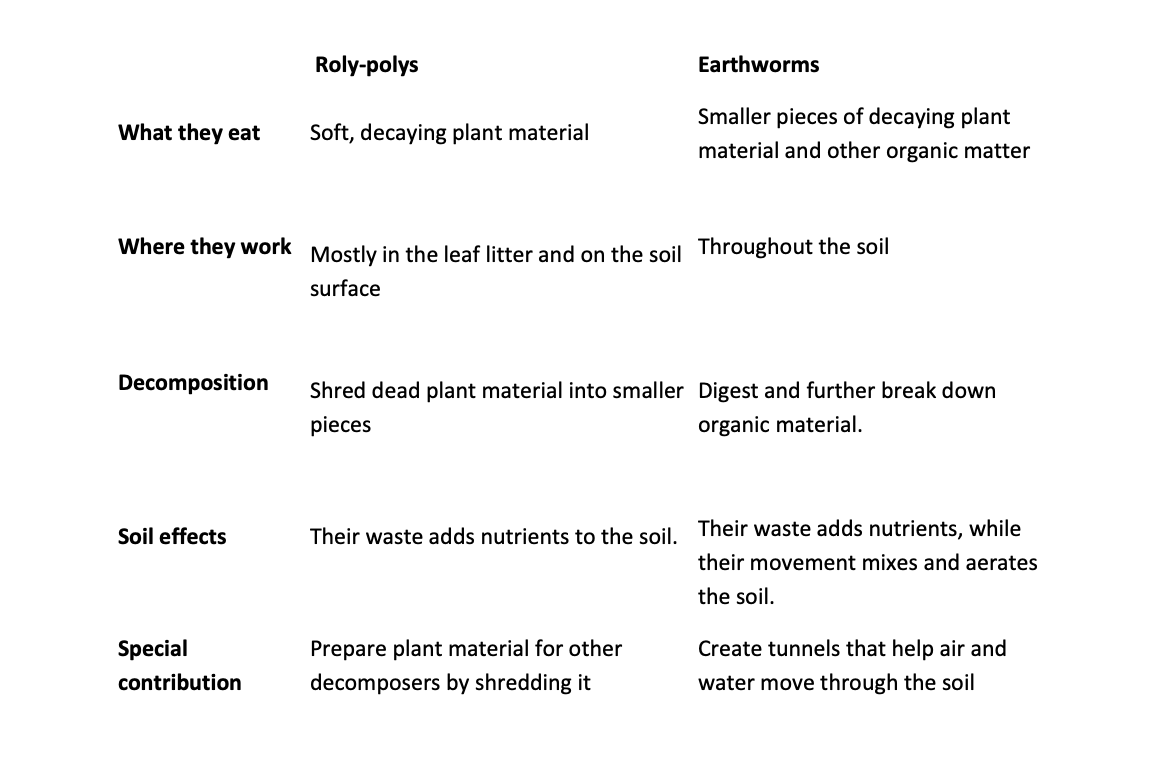
The Process in a nutshell:
Dead leaves → roly-polys shred them → earthworms further break them down → fungi & bacteria break them down chemically → nutrients return to the soil → plants use them again.
And after all that hard work, voila! The watermelon is now rich, beautiful garden “gold” that nurtures tomorrow’s harvest.
Getting Down in the Dirt: Decomposers Up Close
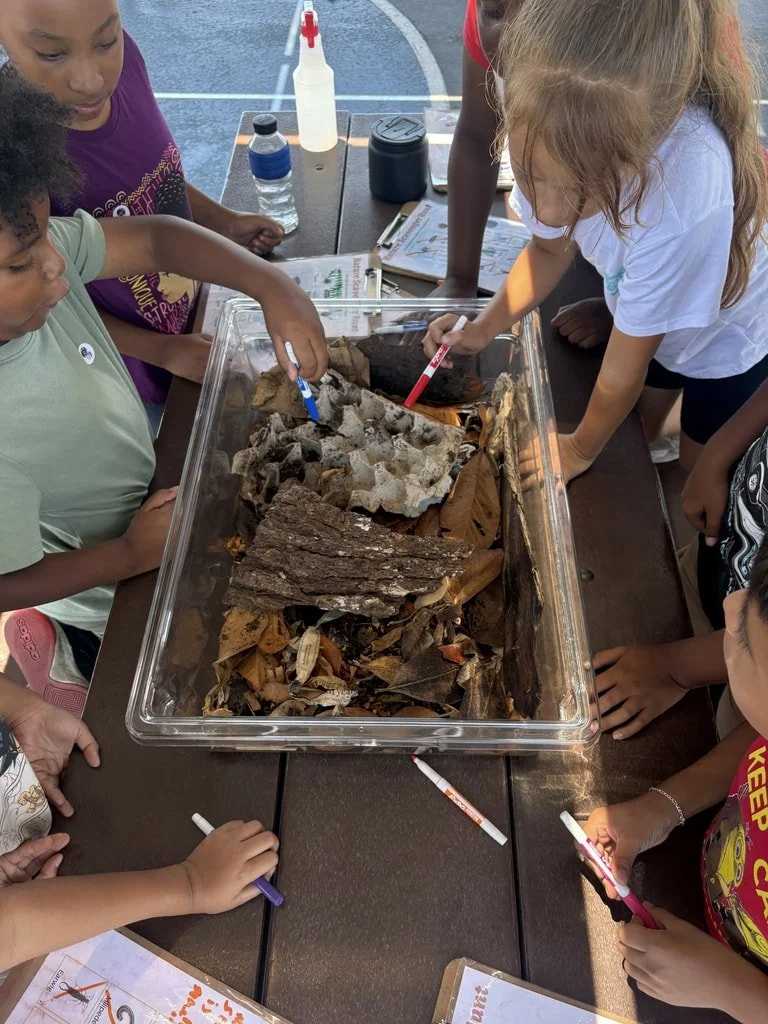
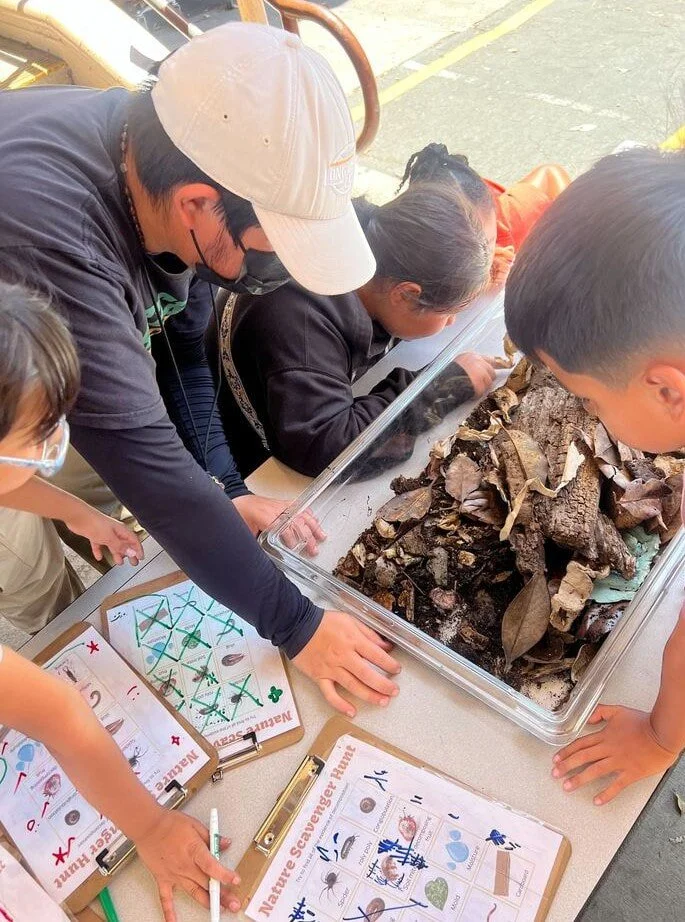
To get a closer look at the mystery unfolding beneath their feet, our team created bins filled with detritus and other materials commonly found in gardens, compost piles, and soil. Students became scientists as they examined these miniature ecosystems, looking closely at the evidence and discovering what happens as nature takes its course.
Then, they took their investigations outdoors. Students observed live decomposers in their natural habitats, explored soil and leaf litter with magnifying glasses, tasted fresh watermelon grown in healthy soil, and discovered why caring for these often-overlooked garden residents is so important.
By combining storytelling, scientific inquiry, active movement, and outdoor exploration, the program cultivated curiosity and environmental stewardship that will continue to grow long after summer ends. And perhaps the biggest clue of all? A healthy garden is never the work of just one organism. From the tiniest microbes to the earthworms beneath our feet, every garden resident plays a part in turning what’s old into what’s next—and helping the seeds of tomorrow take root.
